


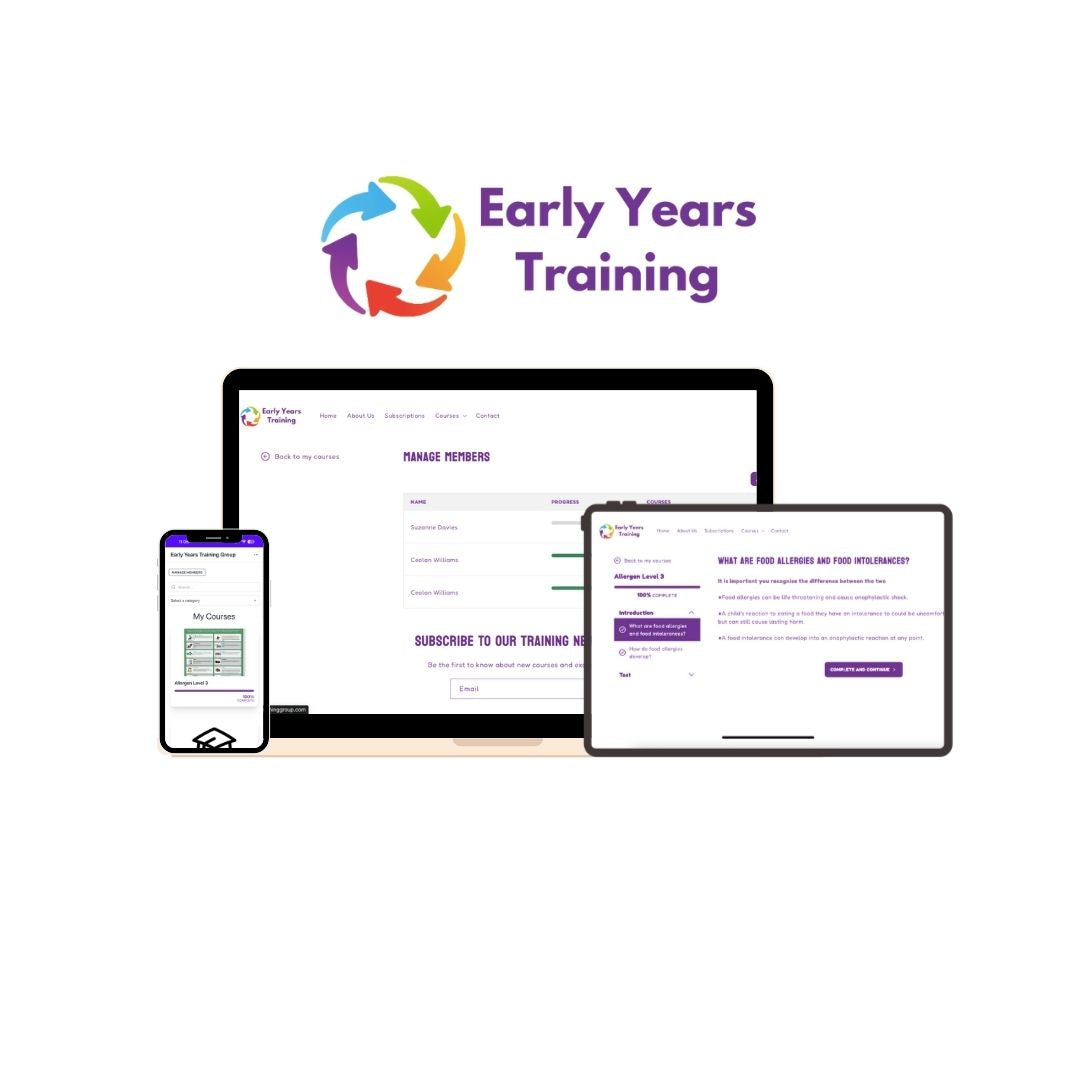
Train More. Spend Less.
Love this course? Unlock our whole training library.
Instead of purchasing courses individually, our memberships give you unlimited access to our online training library for one simple annual price.
Single User Membership
£50
per user / year
Perfect for individual practitioners and childminders who want year-round access to online professional development.
✓
Unlimited access to our online course library
✓
CPD certified and accredited training
✓
Learn online at your own pace
✓
Digital certificates on completion
Best Value
Organisation Membership
£25
per user / year · minimum 5 users
Give your whole team access to essential early years training while keeping your annual training costs simple.
✓
Unlimited training for every registered user
✓
Individual accounts for your team
✓
CPD certified and accredited training
✓
Ideal for nurseries and early years settings
One annual membership. Unlimited online learning throughout the year.
Explore Membership Options
→
View full membership details, benefits and pricing
Got any questions?
If you have any questions or want to book this course in our face-to-face version, please contact us via this form.